Do you repair integrated AEG fridge freezers?
Suitable integrated fridge, freezer and fridge-freezer faults can be assessed, subject to model, access, fault and parts availability.
Independent AEG fridge, freezer and fridge-freezer repairs in Tunbridge Wells for integrated and freestanding appliances. Search 40 fault routes, check the local map, then use AI, SI or online booking.
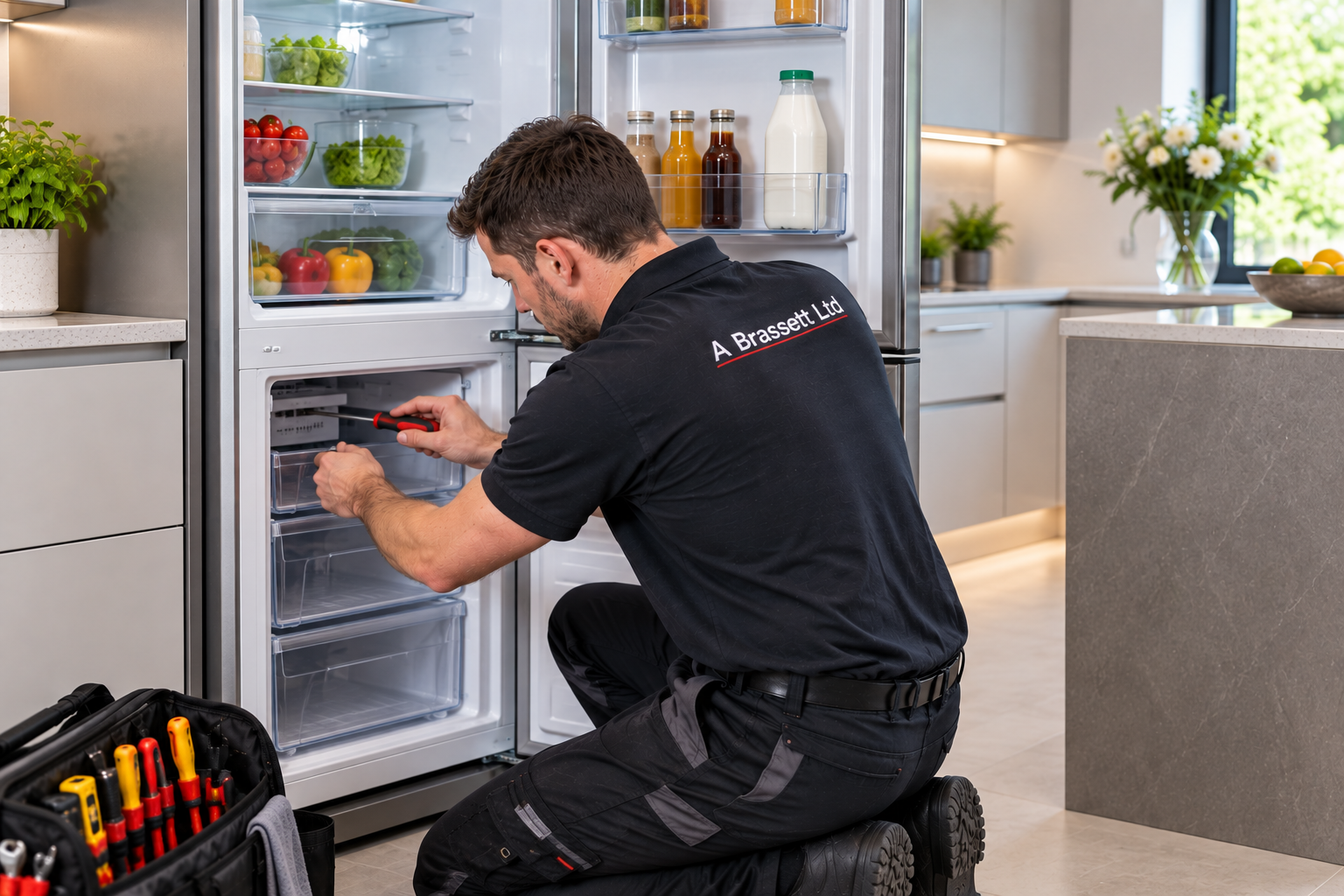
The uploaded page covers both integrated and freestanding refrigeration. This rebuild keeps that focus while separating the main appliance types and likely fault paths more clearly.
Local areas have been retained from the uploaded page. Select a town or district to focus the map. Final attendance depends on the full postcode, appliance type, fault and current engineer route.
Royal Tunbridge Wells, Southborough, Pembury, Rusthall, Speldhurst, Langton Green, Groombridge, Bidborough, TN1–TN12, TN17–TN22
Map: Tunbridge Wells, UK
Search by symptom. These are possible diagnostic areas and safe first checks, not a remote confirmation of the failed component.
Possible fault areas: Temperature sensor, fan/airflow, door seal, control, defrost system or sealed-system performance.
Safe first checks: Check the set temperature, door closure and that internal vents are not blocked by food.
Possible fault areas: Power, control, fan, temperature sensing or refrigeration-system fault.
Safe first checks: Check the socket and controls. Keep food safety in mind if temperatures have risen.
Possible fault areas: Temperature sensing, airflow, fan, defrost system, control or refrigeration-system performance.
Safe first checks: Check door closure, temperature setting and whether the fan can be heard.
Possible fault areas: Airflow, damper where fitted, fan, sensor, defrost or compartment-specific control fault.
Safe first checks: Check internal vents and note which compartment changes temperature first.
Possible fault areas: Temperature sensor, control setting, airflow/damper or control electronics.
Safe first checks: Check the set temperature and whether food is touching cold-air outlets.
Possible fault areas: Door use/seal, sensor, fan, defrost cycle, control or refrigeration-system issue.
Safe first checks: Record the displayed temperature and whether fluctuation follows door opening or defrost periods.
Possible fault areas: Door seal, door left ajar, defrost heater/sensor, fan or defrost control.
Safe first checks: Check the door closes fully and the gasket is clean and undamaged.
Possible fault areas: Blocked drain, defrost system, door seal or excess moisture ingress.
Safe first checks: Do not chip ice with sharp tools; note where ice first forms.
Possible fault areas: Blocked defrost drain, drain channel, condensation path or door-seal issue.
Safe first checks: Check visible drain channels only if user-accessible; avoid dismantling panels.
Possible fault areas: Drain tray/path, blocked defrost drain or internal leak.
Safe first checks: Stop if water is near electrics and note where it first appears.
Possible fault areas: Food debris, ice or residue in a user-accessible drain channel.
Safe first checks: Clean only visible/user-accessible drain points using the appliance instructions.
Possible fault areas: Ice contact, fan motor, obstruction, bearing or mounting issue.
Safe first checks: Note whether the noise stops when the door opens.
Possible fault areas: Ice build-up, fan motor, obstruction or defrost problem.
Safe first checks: Stop if the fan is scraping heavily or blades appear obstructed.
Possible fault areas: Relay/control action, fan, compressor-start circuit or thermal protection.
Safe first checks: Record the timing and whether cooling starts after the click.
Possible fault areas: Fan, compressor operation, vibration, pipe/contact noise or control issue.
Safe first checks: Check the appliance is level and not touching adjacent cabinets.
Possible fault areas: Levelling, loose shelf/panel, fan, pipe contact or compressor vibration.
Safe first checks: Check removable shelves and whether the cabinet is touching furniture.
Possible fault areas: Lamp/LED, door switch, wiring or control.
Safe first checks: Check the door switch behaviour if visible; do not remove internal electrical covers.
Possible fault areas: Power, user interface, connection, wiring or main control.
Safe first checks: Check mains supply and whether cooling is still operating.
Possible fault areas: Temperature alarm, door alarm, sensor, power interruption or model-specific fault.
Safe first checks: Photograph the exact warning/code and rating plate.
Possible fault areas: Model-specific sensor, fan, defrost, control or refrigeration-system fault.
Safe first checks: Record the exact code and full model/PNC details; meanings can vary by model.
Possible fault areas: Door alignment, door switch/sensor, seal, hinge or control issue.
Safe first checks: Check the door is fully closed and no shelf or drawer is preventing closure.
Possible fault areas: Hinge, alignment, overloaded door shelf, seal or cabinet level.
Safe first checks: Check for obstructions and whether the appliance is level.
Possible fault areas: Torn, distorted, dirty or poorly seated gasket.
Safe first checks: Clean the seal and inspect for visible gaps; replacement suitability depends on exact model.
Possible fault areas: Door seal, frequent opening, warm food, blocked airflow or humidity setting.
Safe first checks: Check the seal, vents and loading; avoid placing hot food directly inside.
Possible fault areas: High room humidity, door-seal leakage or installation/ventilation issue.
Safe first checks: Check ventilation space and whether condensation is localised around the door.
Possible fault areas: Temperature setting, airflow outlet, sensor or damper/control issue.
Safe first checks: Move food away from direct cold-air outlets and check the set temperature.
Possible fault areas: Temperature too high, poor airflow, door-seal issue, sensor/control or cooling fault.
Safe first checks: Check actual compartment temperature and minimise door opening.
Possible fault areas: High ambient temperature, door/seal issue, heavy loading, sensor, airflow or cooling-system performance.
Safe first checks: Check door closure, ventilation and temperature setting. We do not undertake compressor replacement.
Possible fault areas: Temperature sensing, door opening, airflow, control or cooling-system behaviour.
Safe first checks: Record cycle timing and room temperature.
Possible fault areas: Wiring, heater/defrost component, fan, control or another electrical fault.
Safe first checks: Stop using and do not repeatedly reset the electrical supply.
Possible fault areas: Wiring, control, fan motor or another electrical component overheating.
Safe first checks: Stop using immediately and isolate the appliance safely.
Possible fault areas: Socket/supply, plug, internal power path, control or wiring.
Safe first checks: Check the socket safely with another suitable appliance.
Possible fault areas: Moisture ingress, door seal, defrost issue or drain blockage.
Safe first checks: Do not force the drawer; allow safe defrosting according to the manual.
Possible fault areas: Defrost heater, sensor, timer/control, fan or drain path.
Safe first checks: Note where frost accumulates and whether fan noise changes.
Possible fault areas: Control reset, temperature recovery, sensor/alarm or separate fault.
Safe first checks: Allow normal recovery time, then record temperature and alarms.
Possible fault areas: Intermittent fan, sensor, defrost, control, door-seal or cooling-system issue.
Safe first checks: Record morning temperature and whether the fan can be heard.
Possible fault areas: Furniture hinge/slider, appliance hinge, alignment or installation issue.
Safe first checks: Do not force the furniture door; note rubbing, dropping or incomplete closure.
Possible fault areas: Furniture hinge/slider, appliance hinge, alignment or installation issue.
Safe first checks: Check whether the cabinet door prevents the appliance door sealing.
Possible fault areas: Fan, sensor, control, defrost system or refrigeration-system performance.
Safe first checks: Confirm power and settings; allow normal temperature pull-down time before assessing.
Possible fault areas: Airflow blockage, fan, damper, ice build-up or sensor/control issue.
Safe first checks: Check vents are clear and note fan behaviour.
Search by postcode prefix or town. White-goods coverage excludes Cornwall, Devon and Dorset and does not include OX or SN routes. Final availability is confirmed by full postcode, appliance and job type.
Suitable integrated fridge, freezer and fridge-freezer faults can be assessed, subject to model, access, fault and parts availability.
No. American-style fridge freezers are outside our refrigeration service scope.
No. We do not undertake compressor changes or sealed-system/refrigerant repairs.
Possible areas include airflow, fan, damper, frost build-up, sensing or control. The exact model helps narrow the route.
Engineer visits are scheduled Monday to Thursday, subject to route and booking availability.
Yes. Use the Book Online button on this page to submit the service request securely.
Additional services can be discussed where relevant to the job and route.
Engineer visits are scheduled Monday to Thursday. Concentrating our field routes into four organised service days helps us plan travel efficiently and offer clear appointment windows, while maintaining the dependable service expected from a family business established in 1984.
Visit windows: Morning 8:00–10:30 · Extended Morning 8:00–13:30 · Afternoon 12:00–16:00 · All Day 8:00–16:00. Subject to route and booking availability.